

How Small Businesses Can Cut Costs with AI Agents
Mara Osei
AI Research Lead
The Small Business AI Opportunity
Enterprise companies have armies of ML engineers and months-long AI projects. Small businesses have neither — but they have something more valuable: focused, well-defined problems. A 10-person company that processes 200 invoices a month, spends three hours a day answering the same customer questions, and manually enters data between two systems is sitting on an enormous efficiency opportunity. Each of those problems is solvable with a marketplace agent today, without a single line of custom code.
The Five Highest-ROI Use Cases for SMBs
Based on deployment data, the five agent use cases with the fastest payback period for small businesses are: customer support triage (agents that answer FAQs and route complex issues to humans), invoice and receipt processing (agents that extract, categorise, and enter financial data), lead enrichment (agents that research new leads and append firmographic data before the first call), meeting notes and action items (agents that summarise calls and distribute action items automatically), and social media scheduling (agents that draft, schedule, and publish content based on a simple content brief).
A small business does not need a data science team to benefit from AI agents. It needs one process that is clearly defined and painfully repetitive.
A Realistic ROI Calculation
Take customer support triage as an example. A small e-commerce business receives 150 support tickets per week. An agent handles 60% of them without human involvement — that is 90 tickets. At five minutes per ticket for a human agent at $20/hour, that is $150 in labour saved per week, or $7,800 per year. A support agent on a marketplace typically costs $50-200 per month. Even at the higher price, the payback period is under two months. The calculation holds across most use cases: the question is not whether the math works, it is which process to automate first.
Getting Started Without an IT Team
The barrier for small businesses is not technical — marketplace agents are designed to be deployed without engineering resources. The barrier is process clarity. Before deploying any agent, write down exactly what the task is, what a good output looks like, and what should happen when the agent encounters something it cannot handle. This is the same discipline you would apply before hiring a human for the role. Teams that do this upfront work deploy agents that actually get used; teams that skip it end up with agents that nobody trusts.
What to Watch Out For
Two common mistakes small businesses make when deploying their first agents. First, choosing the most impressive-sounding use case rather than the most repetitive one — agents deliver ROI through volume, not complexity. Second, failing to assign a human owner for each agent deployment. Someone needs to monitor outputs weekly, handle escalations, and update the agent when business processes change. An agent with no owner drifts, produces errors, and gets abandoned. Assign ownership before you deploy, not after.
Ready to deploy your first agent?
Explore hundreds of AI agents on Skillforge — no code required.
Explore AgentsMore from the Blog

AI Agents for Customer Support: A Business Playbook
Customer support is the most mature AI agent use case in business today. Here is a step-by-step playbook for deploying agents that customers actually like interacting with.
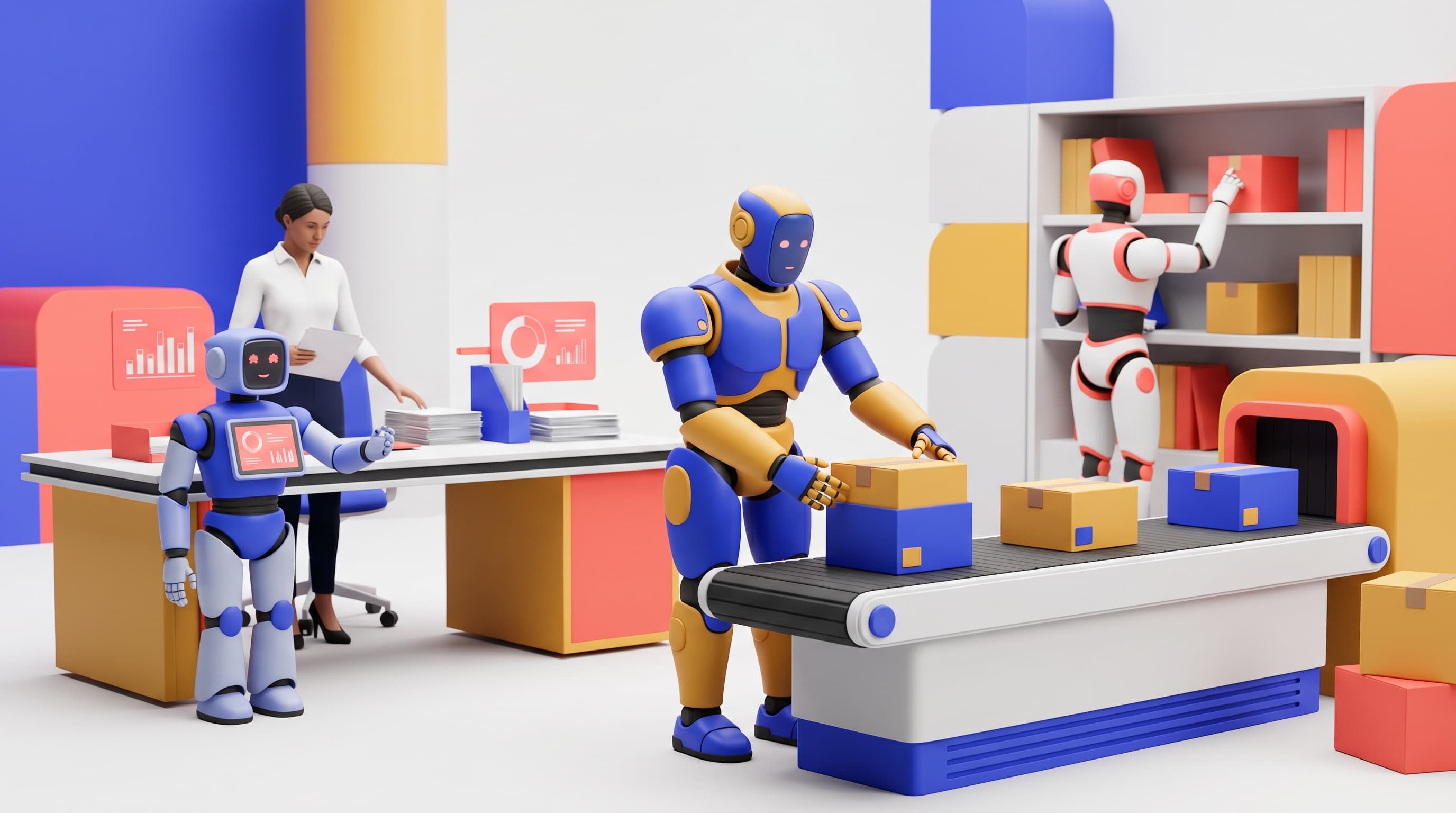
Automating Your Ops Team with AI Agents
Operations teams are buried in repetitive coordination work. AI agents can absorb that work — freeing your best operators for the decisions that actually need human judgment.

The Future of Work: AI Agents as Your Digital Workforce
The companies that win the next decade will not be those that have the most employees — they will be those that most effectively combine human judgment with AI agent execution.