
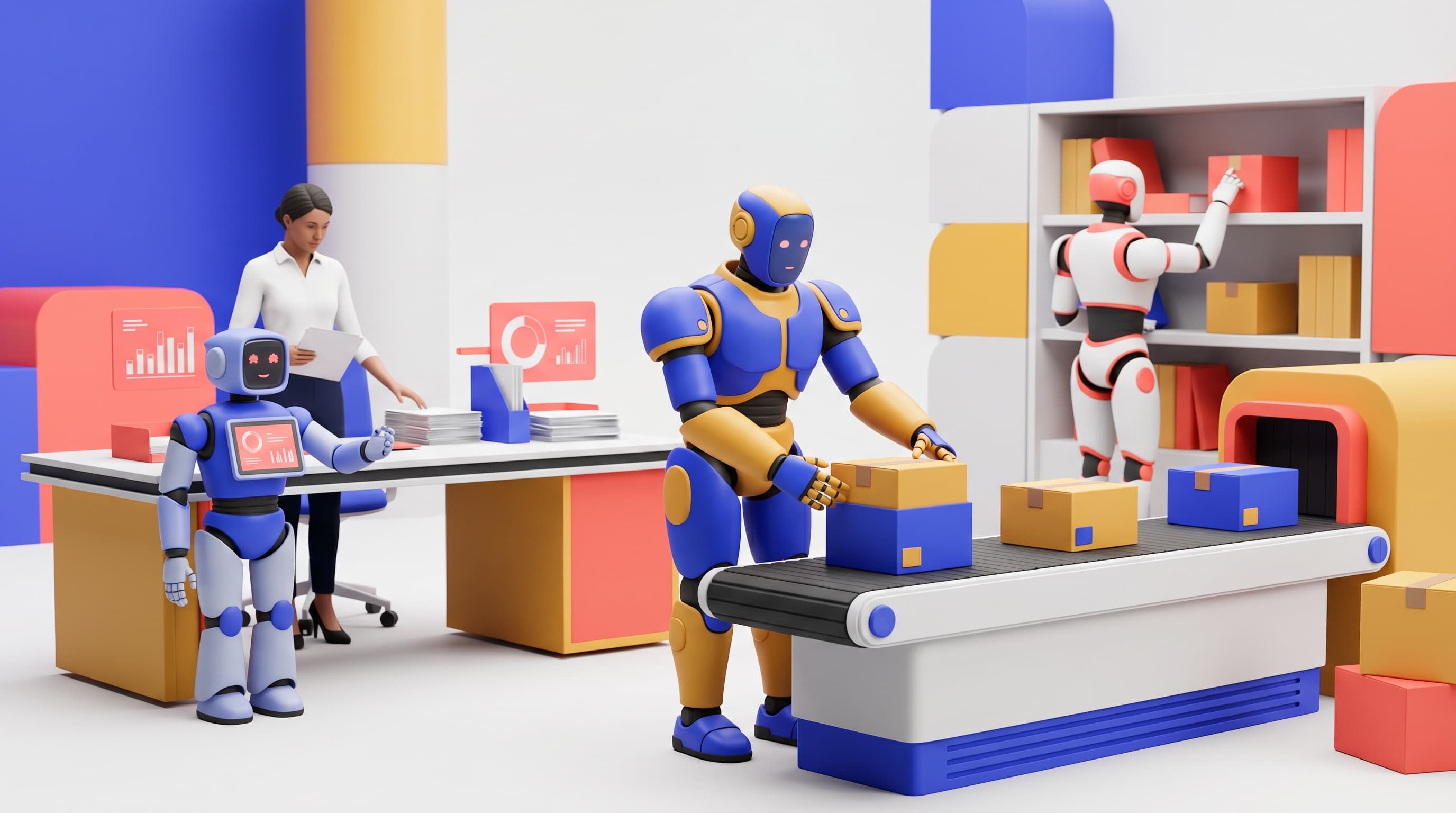
Automating Your Ops Team with AI Agents
Priya Nair
ML Engineer
The Ops Tax
In most companies, a significant percentage of every operator's week is consumed by what practitioners call "ops tax" — work that is necessary for coordination but adds no direct value: status update requests, data entry between systems, report compilation, SLA tracking, meeting scheduling, and exception routing. Studies of operations teams consistently find that 30-50% of time goes to this category. AI agents are particularly well-suited to absorbing the ops tax because these tasks are high-volume, rule-based, and easily defined — exactly the profile where agents thrive.
The Highest-Value Ops Agent Use Cases
Data synchronisation agents watch for updates in one system and propagate them to others — eliminating the manual CRM-to-spreadsheet copy that someone on your team does every Monday morning. Report generation agents pull data from multiple sources on a schedule, run predefined calculations, and distribute formatted reports to the right stakeholders — without anyone setting a calendar reminder. Exception routing agents monitor queues and automatically assign items based on type, priority, and team capacity, escalating overdue items before they become incidents. Status digest agents compile updates from multiple tools (GitHub, Jira, Slack) into a single daily summary for managers.
The best operations teams are not the ones that work the hardest. They are the ones that are ruthless about eliminating work that does not require human judgment.
Mapping Your Ops Workflows for Agent Readiness
Not every ops task is ready for agent automation. Before deploying, classify your team's recurring tasks on two dimensions: rule-clarity (can you write down exactly how to do this task without leaving anything to interpretation?) and exception-rate (what percentage of instances are unusual in ways that require judgment?). Tasks that are high rule-clarity and low exception-rate are prime candidates. Tasks that are low rule-clarity or high exception-rate need human ownership, though an agent can assist. This mapping exercise typically takes a half day and produces a prioritised backlog of automation opportunities.
Integration: The Make-or-Break Factor
An ops agent that cannot connect to your actual tools provides no value. Before selecting an agent, verify it integrates natively with the specific systems your team uses — not generic categories but specific products. "Works with CRM software" is not the same as "works with HubSpot at the field-mapping level your team requires." Integration depth matters more for ops use cases than for almost any other category, because ops workflows typically span five or more tools and a gap at any point in the chain breaks the automation.
Running the First Automation in Parallel
For your first ops agent deployment, run it in parallel with the existing manual process for two weeks before switching over. Have a human do the task the old way and compare outputs with the agent's outputs side by side. This builds trust internally, catches configuration errors before they affect production, and gives you a concrete accuracy baseline. Teams that skip parallel running and go straight to replacement often encounter a costly failure in week three that sets their whole AI programme back by months.
Ready to deploy your first agent?
Explore hundreds of AI agents on Skillforge — no code required.
Explore AgentsMore from the Blog

How Small Businesses Can Cut Costs with AI Agents
AI agents are not just for enterprises with ML teams. Small businesses can deploy production-ready agents today — at a fraction of the cost of a new hire.

AI Agents for Customer Support: A Business Playbook
Customer support is the most mature AI agent use case in business today. Here is a step-by-step playbook for deploying agents that customers actually like interacting with.

The Future of Work: AI Agents as Your Digital Workforce
The companies that win the next decade will not be those that have the most employees — they will be those that most effectively combine human judgment with AI agent execution.