

The Future of Work: AI Agents as Your Digital Workforce
Mara Osei
AI Research Lead
The Organisational Structure Is Changing
For most of the 20th century, organisational growth meant headcount growth. More customers required more customer service representatives. More code to write required more engineers. More markets to enter required more regional teams. This relationship between scale and headcount is breaking. A 50-person company today can deploy a workforce of agents that handles the operational volume of a 500-person company from a decade ago. The constraint on scale is shifting from people to judgment — humans providing strategic direction while agents execute at volume.
The Agent-First Team Structure
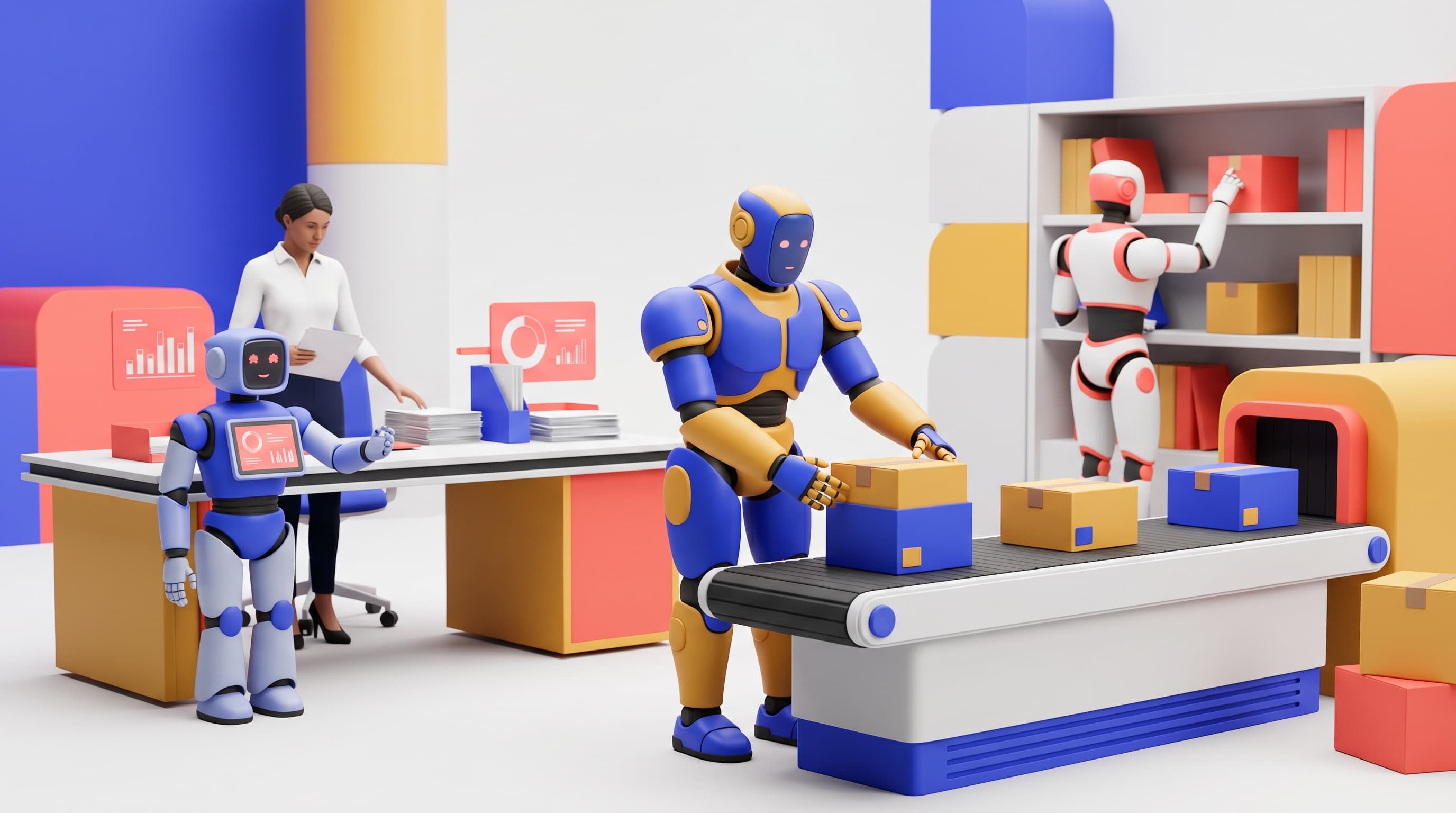
Early adopters of agent-first thinking are restructuring their teams around a different model. Instead of hiring people to do tasks, they hire people to own outcomes — and deploy agents to handle the task execution. A marketing team of five does not hire a sixth person to manage social media; they deploy a social media agent and hire a strategist who owns brand positioning. An engineering team does not hire a dedicated QA engineer; they deploy an agent that runs regression tests and surfaces failures, and the existing engineers own quality as an outcome. The team stays small; the scope of what it can accomplish expands.
The organisations that thrive in an agentic world will be those that are best at defining what to do — and then getting out of the way while agents do it.
What Humans Will Do
The work that remains uniquely human falls into three categories. Strategic judgment: deciding which problems are worth solving, which markets to enter, which bets to take. Relationship and trust: building the human connections that underpin partnerships, sales, and leadership. Creative and ethical oversight: evaluating agent outputs for appropriateness, catching the edge cases that automated systems miss, and making calls that require genuine moral reasoning. These are not consolation prizes — they are the highest-leverage activities in any organisation, and they are the ones that have historically been crowded out by operational busywork.
The Competitive Implications
The productivity gap between agent-first organisations and traditional organisations is going to widen faster than most leadership teams expect. A company that deploys twenty well-chosen agents and integrates them into its core workflows can operate at an efficiency level that would have required twice the headcount two years ago. Competitors who are still debating whether AI is ready for production will find themselves priced out of markets they thought they owned. The window for a deliberate, thoughtful adoption is open now — in two years, the laggards will be playing catch-up rather than making strategic choices.
Starting the Transition: A Leadership Checklist
For leadership teams beginning this transition, five priorities: One, audit your existing workflows for agent-readiness — identify the 20% of tasks that consume 80% of operational time. Two, start with a single high-volume, low-risk deployment and measure it rigorously. Three, invest in change management — your team needs to understand that agents are tools that make their work better, not replacements. Four, establish governance: who owns each agent, how are outputs monitored, what are the escalation paths? Five, build a culture of iteration — your first agent deployment will be imperfect, and teams that treat iteration as failure will not improve. The companies winning with AI agents are the ones that ship fast, measure honestly, and adjust constantly.
Ready to deploy your first agent?
Explore hundreds of AI agents on Skillforge — no code required.
Explore AgentsMore from the Blog

How Small Businesses Can Cut Costs with AI Agents
AI agents are not just for enterprises with ML teams. Small businesses can deploy production-ready agents today — at a fraction of the cost of a new hire.

AI Agents for Customer Support: A Business Playbook
Customer support is the most mature AI agent use case in business today. Here is a step-by-step playbook for deploying agents that customers actually like interacting with.
Automating Your Ops Team with AI Agents
Operations teams are buried in repetitive coordination work. AI agents can absorb that work — freeing your best operators for the decisions that actually need human judgment.