

What Are AI Agents? A Plain-English Guide
Mara Osei
AI Research Lead
The One-Sentence Definition
An AI agent is a software program that perceives inputs from its environment, reasons about what to do next, executes an action — often using external tools — and then observes the result to decide what to do next. Unlike a traditional chatbot that simply responds to a prompt, an agent can chain multiple steps together, remember previous context, and loop until a task is genuinely complete. Think of it less like a calculator and more like a junior employee who can figure out the steps on their own.
How Agents Differ from Chatbots
A chatbot turns your input into output in a single pass — you ask, it answers, done. An AI agent treats your input as a goal to accomplish. It will search the web, call an API, write a file, send an email, and then report back when the work is finished. The difference is autonomy: a chatbot is reactive, an agent is proactive. This makes agents dramatically more useful for real business workflows where the answer to a question is rarely the last step.
A chatbot tells you the recipe. An AI agent shops for the ingredients, preheats the oven, and has dinner ready when you get home.
The Four Components of Every Agent
Every AI agent — regardless of which model powers it — has four building blocks. First, a perception layer that reads inputs (your instructions, tool outputs, file contents). Second, a reasoning engine, usually a large language model, that decides what action to take next. Third, a set of tools the agent can invoke: web search, code execution, database queries, API calls. Fourth, memory — both short-term context within a session and, increasingly, long-term storage that persists across sessions. Remove any one of these and you have a chatbot, not an agent.
Real-World Examples You Already Know
GitHub Copilot Workspace is an agent: give it a GitHub issue and it will read the codebase, write the code, and open a pull request. Notion AI can be asked to "summarise all meeting notes from last month" and it will search your workspace, pull the relevant pages, and synthesise a report. Customer support agents at companies like Intercom can resolve password resets, process refunds, and update billing details — no human required for routine cases. The common thread: they all do more than one thing in sequence.
Why Now?
Three things converged in 2024 to make agents practical rather than theoretical. Large language models became reliable enough at following multi-step instructions. Tool-calling APIs matured — models can now invoke functions with structured outputs consistently. And compute costs dropped to the point where chaining ten model calls costs pennies, not dollars. The result is a Cambrian explosion of agents solving narrow, well-defined problems at a price point that makes business sense.
Ready to deploy your first agent?
Explore hundreds of AI agents on Skillforge — no code required.
Explore AgentsMore from the Blog

The Rise of Agentic AI: From Chatbots to Autonomous Workers
The shift from chatbots to autonomous AI agents is the most significant change in how businesses will use software over the next decade.
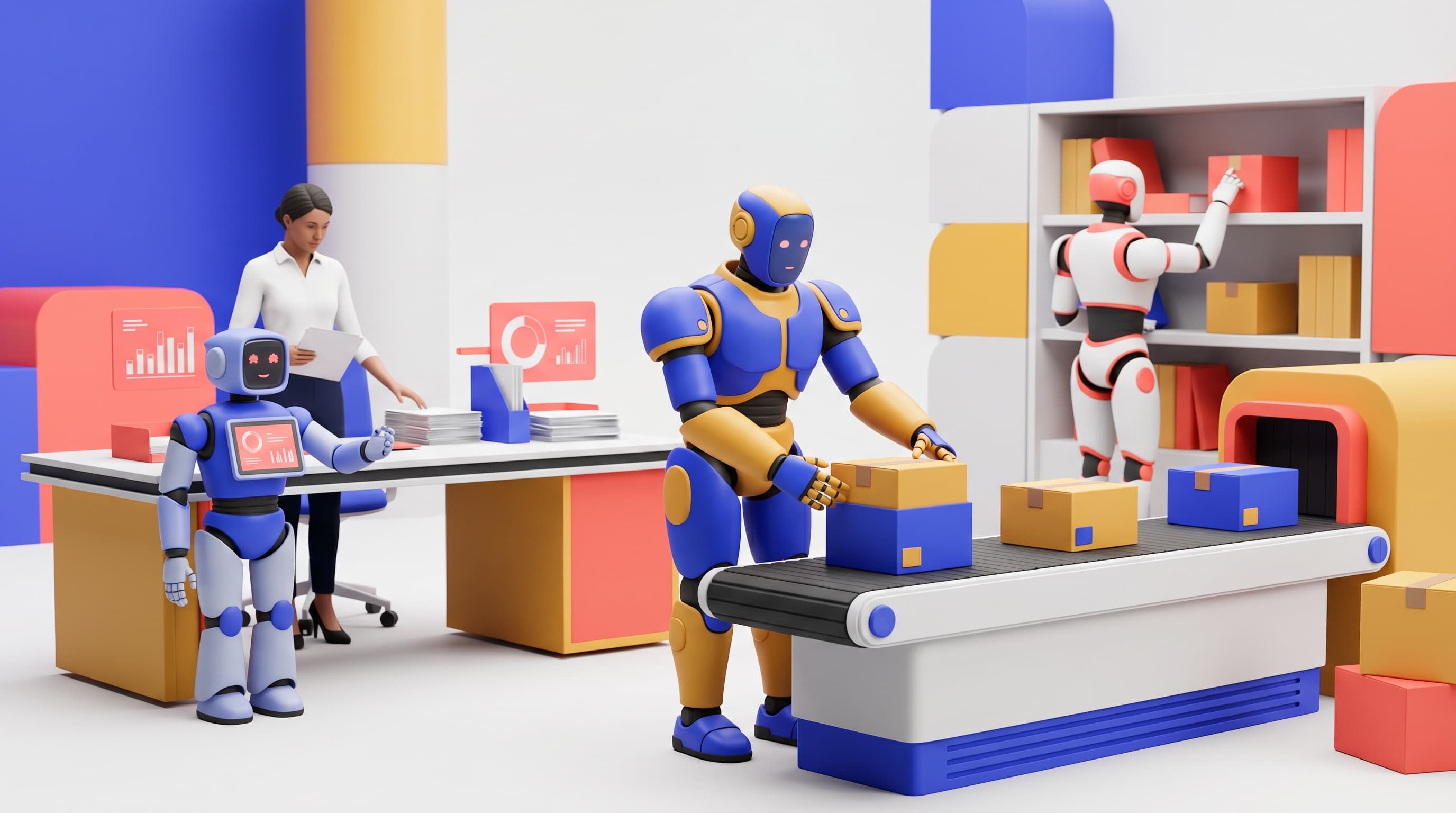
How AI Agents Actually Make Decisions
Under the hood, AI agents run a tight loop: think, act, observe, repeat. Understanding this loop explains both their power and their limitations.

Inside the AI Agent Marketplace Economy
A new creator economy is forming around AI agents — where builders package expertise into deployable software and businesses buy capability instead of time.